Authenticity Report
La Trinità
Il Paradiso
Titian’s Magnum Opus
Fine Art Detective
Authenticity Report
Titian’s Magnum Opus
Fine Art Detective
The Authenticity Report · The Ebook
La Trinità · Il Paradiso
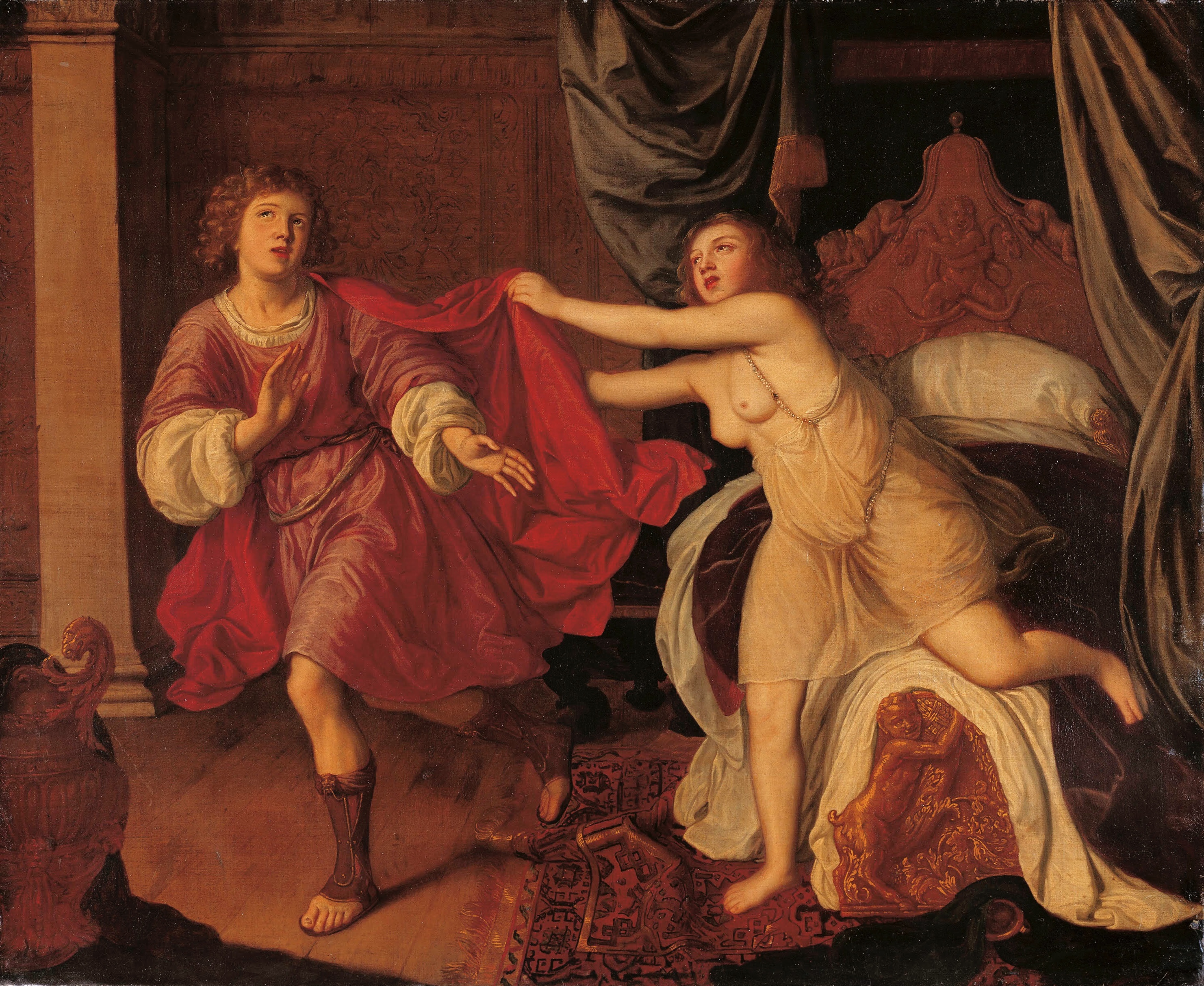
A substantial Fine Art Detective research publication by Ian Lea Henderson — the full authenticity report on an oil-on-canvas painting long catalogued as Joseph and Potiphar’s Wife, examined here as a work by Titian.
Oil on canvas, c. 125 × 102 cm · Private collection, London.
Research & authorship: Ian Lea Henderson · Narration: Fine Art Detective — audio edition coming soon
Abstract
This report examines an oil-on-canvas painting long catalogued as Joseph and Potiphar’s Wife and argues that it is a work by Titian — the lost, original studio oil sketch for the great Trinity (La Gloria / Il Paradiso) now in the Museo del Prado.
Read through Erwin Panofsky’s iconological method and disciplined against securely documented Titians, the picture is interpreted not as a biblical narrative but as an initiatory image set in the world of Isabella d’Este’s studiolo at Mantua. The technical case draws on the 2005 Editech diagnostic dossier (Ing. Maurizio Seracini), independent review by Dr J. E. Metcalfe, and a provenance traced from the finished sketch for La Gloria.
Throughout, documented findings, proposed readings, and matters still to be tested are kept distinct.
Object Identification
Contents
Inside the report
Four strands of evidence — technical, art-historical, iconographic and documentary — are weighed against securely attributed works.
A beige preparation of calcite, lead white and earth pigments — documented in Mantegna and Dosso Dossi, and suited to a canvas built to be rolled — set against Titian’s usual gesso-and-glue grounds.
Sixteen X-radiographs and 146 infrared frames record the collar, a hand, a leg, the robe and a vase all being revised on the canvas — the signature of an original invention, not a copy.
Radiocarbon returned an anomalously early range attributed to organic contamination of the canvas sample; a lead-210 measurement is consistent with an age of more than 250 years.
Read through Panofsky’s iconology, the “Joseph and Potiphar’s Wife” surface is proposed as cover for an initiatory image set in the world of Isabella d’Este’s studiolo at Mantua.
The complete ebook — abstract, object study, condition, the scientific dossier, iconography, provenance and conclusion, with accompanying technical appendices.